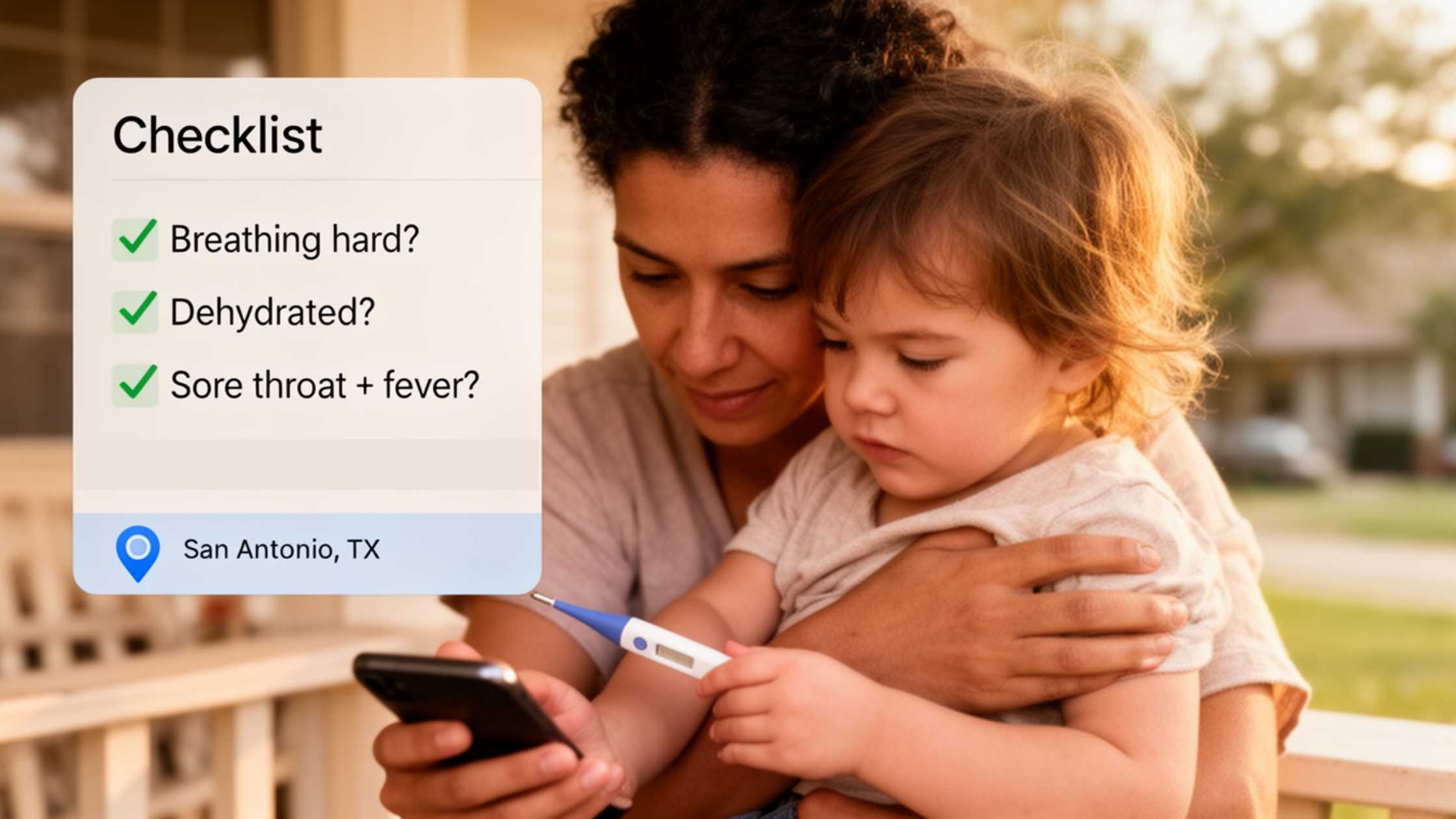
Sick Season in San Antonio: Flu vs. RSV vs. Strep—When to Come In
If your child’s class in SAISD or NEISD is “passing something around,” you’re not imagining it. During sick season, multiple viruses and infections can circulate at the same time—and many share overlapping symptoms.
This guide breaks down flu symptoms in kids, RSV, and strep throat, plus the biggest question parents ask: When should we come in for a same-day pediatric visit in San Antonio?
Quick reminder: This article is for education, not diagnosis. If you’re worried, trust your gut and get your child evaluated.
The 20-second cheat sheet: what it might be.
Flu (influenza): “hit by a truck” sick, often sudden
Flu symptoms often start suddenly and can include fever/chills, cough, sore throat, runny/stuffy nose, body aches, headache, and fatigue. Some kids also have vomiting/diarrhea.
RSV: cold-like at first, but watch breathing—especially in little ones
RSV commonly causes mild, cold-like symptoms, but it can become more serious for babies and some young children.
Strep throat: sore throat + fever… usually without cough/runny nose
Strep is a bacterial throat infection. Many sore throats are viral, but strep is more common in kids than adults and can cause fever, sore throat, and other symptoms like stomach pain or rash.
Symptoms: Flu vs. RSV vs. Strep (parent-friendly)
Flu symptoms in kids (common clues)
● Sudden fever or chills (not always)
● Cough, sore throat, runny/stuffy nose
● Body aches, headaches, fatigue
● Sometimes vomiting/diarrhea (more common in children)
What parents notice: “They were okay at school, then crashed that night.”
RSV symptoms (what to watch for)
RSV often looks like a cold at first, but the “tell” can be breathing symptoms and feeding/hydration issues—especially in babies/toddlers. CDC notes to seek care if your child has difficulty breathing, isn’t drinking enough fluids, or symptoms are worsening.
Common RSV red flags at home:
● Breathing faster than normal or working harder to breathe
● Wheezing, persistent cough
● Poor feeding, fewer wet diapers (dehydration)
Strep throat symptoms (more likely when)
● Sore throat (often comes on quickly) + fever
● Headache, stomach pain, nausea/vomiting (can happen in kids)
● Sometimes a rash (scarlet fever)
Clue it may NOT be strep: obvious viral symptoms like cough/runny nose. CDC notes patients with clear viral symptoms don’t need strep testing.
When to come in for a same-day pediatric visit in San Antonio
Consider a same-day pediatric visit with Pediatric Heroes and Families Primary Care Clinic if your child has:
● Fever that’s persistent, high, or returning after improving
● Sore throat + fever (especially without cough/runny nose) — may need a strep test
● Ear pain, sinus pain, or symptoms that are worsening instead of improving
● Cough with wheezing, fast breathing, or your child seems to be working hard to breathe
● Signs of dehydration (very dry mouth, fewer wet diapers/urination, unable to keep fluids down)
Why same-day matters: For strep, testing confirms whether antibiotics are needed (and helps avoid unnecessary antibiotics when it’s viral).
When it’s urgent: go to the ER (or call 911)
Seek emergency care for any of the following:
● Fast breathing or trouble breathing
● Bluish lips/face or gray color changes
● Signs of dehydration or your child won’t drink (especially with worsening symptoms)
● Severe chest pain, persistent confusion, or your child is very hard to wake
● For flu, CDC lists specific emergency warning signs in children, including trouble breathing and bluish lips/face.
If you’re unsure, it’s safer to get checked.
What we typically do at your visit (and how it helps)
At a problem-focused sick visit, we generally:
● Review symptom timing (sudden vs gradual), exposures at school, and hydration
● Check vitals and do a focused exam
● Decide whether testing is helpful (example: strep testing when appropriate)
● Give a clear plan: home care, school return guidance, and what changes mean “come back”
Home care basics (safe, simple)
● Encourage fluids (small, frequent sips)
● Rest and comfort measures
● Use fever reducers only as directed for age/weight (ask if you’re unsure)
● Keep kids home when feverish and until improving—this protects classmates and teachers too
If your child’s classroom in SAISD/NEISD is passing around illness and you’re not sure whether it’s flu, RSV, or strep throat, Pediatric Heroes and Families Primary Care Clinic can help you decide what’s going on and whether testing or treatment is needed.
Need a same-day pediatric visit in San Antonio? Call or book with Pediatric Heroes and Families Primary Care Clinic.
Can you tell flu vs. RSV vs. strep just by symptoms?
Sometimes you can suspect, but overlap is common. Flu often comes on suddenly with whole-body aches/fatigue. RSV can be cold-like but may involve breathing difficulty, especially in younger kids. Strep is more likely with sore throat + fever and fewer viral symptoms (like cough).
Do all sore throats need a strep test?
No. CDC guidance says kids with clear viral symptoms don’t need testing for group A strep. If strep is suspected, testing guides treatment.
When should I book a same-day pediatric visit in San Antonio?
If symptoms are worsening, your child is struggling to hydrate, breathing seems harder than normal, or you suspect strep (sore throat + fever), same-day is a good choice.
Popular Tags :
Welcome to the blog of Pediatric Heroes Primarily Care Clinic
No matter if your child is already a patient or searching for a pediatrician within the San Antonio area, we're glad you're here. With the advancement of the pediatric field and growing, we understand the importance to keep parents and their visitors informed of the latest and exciting activities happening at our clinic.
As we progress with this blog, we want to help you live a life of health and wellness that will benefit your children. You will find various articles and topics , including health news for children and advancements in pediatric care as well as practical child health tips and news.
We hope that you find our blog informative, interesting and engaging to ensure your child's optimal health.