Office: (210) 625-5708 - Fax: (888) 227-1442
Location: 21970 Bulverde Rd Suite 103, San Antonio, Texas 78259 Working Hours : Mon - Friday 8:00am to 5:30pm - Sat -Sun: Closed
Blog Details

Screen Time, Sleep, and Summer Routines: A Pediatric Reset Plan for Families

One more episode. One more game. One more morning when everyone sleeps in.


Summer gives families welcome flexibility, but bedtime and screen habits can drift. Between camps, travel, and afternoons at home, devices may start filling time that once belonged to reading, movement, or sleep.


A healthy screen time and sleep routine for kids starts with a few predictable habits: enough time for sleep, a screen-free wind-down, and clear expectations about when devices are used. Summer offers a chance to practice those habits before school schedules return.


Look beyond the number of screen-time minutes

How long your child spends on a device matters, but so do the content, timing, and experience. A video call with grandparents, a creative project, and late-night scrolling serve different purposes.


The American Academy of Pediatrics (AAP) encourages families to consider five areas: the individual child, the content, how children calm themselves, what media crowds out, and communication about digital life. This approach helps parents look beyond a single time limit. See the AAP’s 5 C’s of media guidance.


Start with three questions:

• Is device use delaying bedtime or interrupting sleep?

• Is there enough room for play, movement, reading, and relationships?

• How does my child feel during and after using screens?


Use the answers to choose the first habit your family wants to change.


Start with enough time for sleep

Before deciding when screens go off, work out when your child needs to sleep and wake up.


The American Academy of Sleep Medicine recommends these regular sleep amounts:

AgeRecommended sleep in 24 hours
1–2 years11–14 hours, including naps
3–5 years10–13 hours, including naps
6–12 years9–12 hours
13–18 years            8–10 hours

These ranges are a starting point for planning a routine. Your child’s individual needs and daytime alertness also matter. Source: American Academy of Sleep Medicine

Choose a realistic wake-up time, then allow enough time for sleep and settling down. Keep bedtime and wake-up time reasonably consistent throughout the week.


A five-step summer routine reset

1. Notice what is happening now


For a few days, jot down when your child stops using screens, goes to bed, falls asleep, and wakes up. Include any naps and note how mornings feel.


Keep this simple. You are looking for patterns, such as gaming that regularly runs past bedtime or a phone that keeps drawing attention after lights out.


Pick one manageable goal: “We will put devices away before our bedtime routine” is easier to practice than changing the entire day at once.


2. Make the hour before bed screen-free


The AAP recommends turning off screens at least one hour before bedtime and keeping devices out of children’s bedrooms, especially overnight. These boundaries help protect the time children need to wind down. AAP guidance on healthy sleep habits


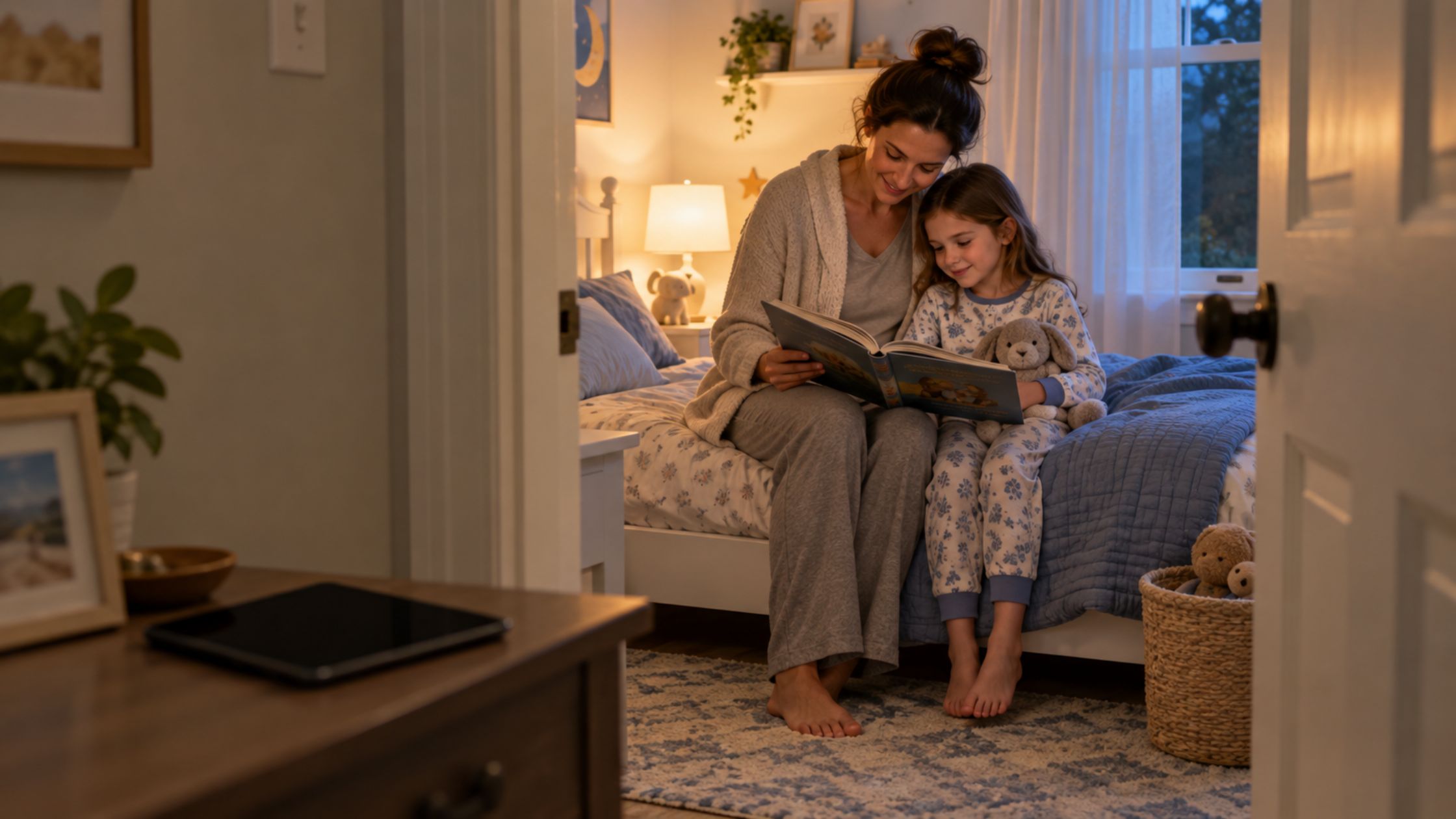
Set up a shared charging spot outside bedrooms. Then choose a short sequence your child can recognize: pajamas, brushing teeth, a book, and a goodnight conversation.


For older children, offer choices within the routine, such as reading, drawing, or quiet music with the screen off.


3. Create a family media plan together


A family media plan spells out when, where, and how devices fit into daily life. Start with a few agreements:


• Keep meals and the bedtime routine screen-free.

• Decide when recreational screen use begins and ends.

• Turn off autoplay and unnecessary notifications.

• Choose age-appropriate content and talk about what children watch or play.

• Include adults in the agreements.


The AAP recommends revisiting media plans as children grow and schedules change. Its Family Media Plan guidance can help you get started.


Explain the goal in concrete terms: “We’re putting phones away so we have time to read together before bed.”

4. Plan what comes after the screen turns off


Make a short list of activities your child actually enjoys. For San Antonio families spending part of the afternoon indoors, options might include:


• Building with blocks or making a craft.

• Dancing to a favorite playlist.

• Playing cards or a board game.

• Reading together or visiting the library.

• Helping prepare a snack or dinner.


Let your child choose between two options. Before a show or game starts, agree on a stopping point and what will happen next. A reminder before that stopping point can make the transition feel less abrupt.


5. Check in and adjust


After a week, talk about what worked. Were mornings easier? Did bedtime feel calmer? Was one rule difficult to follow because of camp, work, or family commitments?


Keep the useful parts and adjust the rest. A late evening or travel day does not erase your progress; return to the routine at the next opportunity.


An example evening routine

Here is one way to organize an evening for a school-age child whose planned bedtime is 8:30 p.m. Adjust the timing to your child’s sleep needs and your household schedule.


TimeActivity
7:30 p.m.Turn off screens and place devices at the charging station
7:30–8:00 p.m.Quiet play, drawing, or preparing for tomorrow
8:00–8:15 p.m.             Wash up, brush teeth, and put on pajamas
8:15–8:30 p.m.Read together and have a brief goodnight conversation
8:30 p.m.Lights out


The sequence matters more than making every minute exact.

Help older children and teens take part

Ask older children what they value about gaming, messaging, or social media. Understanding the appeal gives you a better starting point for setting boundaries.


Talk about how to handle a group chat that stays active late, how to leave a game at the agreed time, and what to do if an online interaction feels upsetting. Together, make room for friendships while protecting sleep and other responsibilities.


Regular, open conversations are part of the AAP’s approach to healthy media habits. Children should know they can come to you with an uncomfortable online experience. AAP media guidance

Begin the school-year transition before the last night of summer

As school approaches, compare the summer schedule with the wake-up time your child will need. Begin moving bedtime and morning routines earlier gradually, leaving enough time for sleep.

Practice a few ordinary school-morning tasks, such as getting dressed and eating breakfast. This gives your family a chance to identify what needs more time before the first day arrives. The American Academy of Sleep Medicine recommends gradually adjusting summer sleep schedules ahead of school. Back-to-school sleep guidance


When to ask your child’s provider for help

Bring up persistent trouble falling asleep, daytime tiredness, or changes in mood, behavior, or school functioning. Also mention frequent snoring or breathing concerns during sleep. These deserve attention rather than an assumption that screens are the only cause. AAP guidance on sleep and health


A short record of sleep times, device use, and symptoms can help you explain what you are noticing.


Pediatric Heroes and Families Primary Care Clinic lists preventive care, behavioral education, and mental health among its services. Read the clinic FAQ for more information.


Ask Pediatric Heroes about healthy routines, sleep concerns, behavior questions, or wellness needs at your child’s next visit. Schedule an appointment or contact the clinic to discuss the appropriate visit for your family.


Frequently asked questions

How can parents reduce screen-time battles?

Create a family media plan with clear expectations about when devices are used and put away. Involve children in choosing alternatives, give a reminder before stopping, and explain what the routine protects, such as sleep, play, and family meals.


How long before bed should kids stop using screens?

The American Academy of Pediatrics recommends turning off screens at least one hour before bedtime. Keeping devices outside the bedroom overnight also helps protect the sleep routine.


How much sleep do school-age children and teens need?

Children ages 6–12 generally need 9–12 hours of sleep per 24 hours. Teens ages 13–18 need 8–10 hours. Plan bedtime around the required wake-up time and allow time to settle down.


Should summer bedtimes stay exactly the same as school-year bedtimes?

Some flexibility can fit your family’s summer plans. Aim for consistent sleep and wake times that still allow enough rest, then gradually shift toward the school schedule before classes begin.


When should I ask a provider about screen habits or sleep?

Ask for guidance when sleep difficulties, daytime tiredness, mood changes, or family conflict persist. Mention frequent snoring or breathing concerns during sleep, too. A provider can help assess the situation and recommend appropriate next steps.


Popular Tags :
Welcome to the blog of Pediatric Heroes Primarily Care Clinic

No matter if your child is already a patient or searching for a pediatrician within the San Antonio area, we're glad you're here. With the advancement of the pediatric field and growing, we understand the importance to keep parents and their visitors informed of the latest and exciting activities happening at our clinic.

As we progress with this blog, we want to help you live a life of health and wellness that will benefit your children. You will find various articles and topics , including health news for children and advancements in pediatric care as well as practical child health tips and news.

We hope that you find our blog informative, interesting and engaging to ensure your child's optimal health.
Need Any Help?

Contact us today!